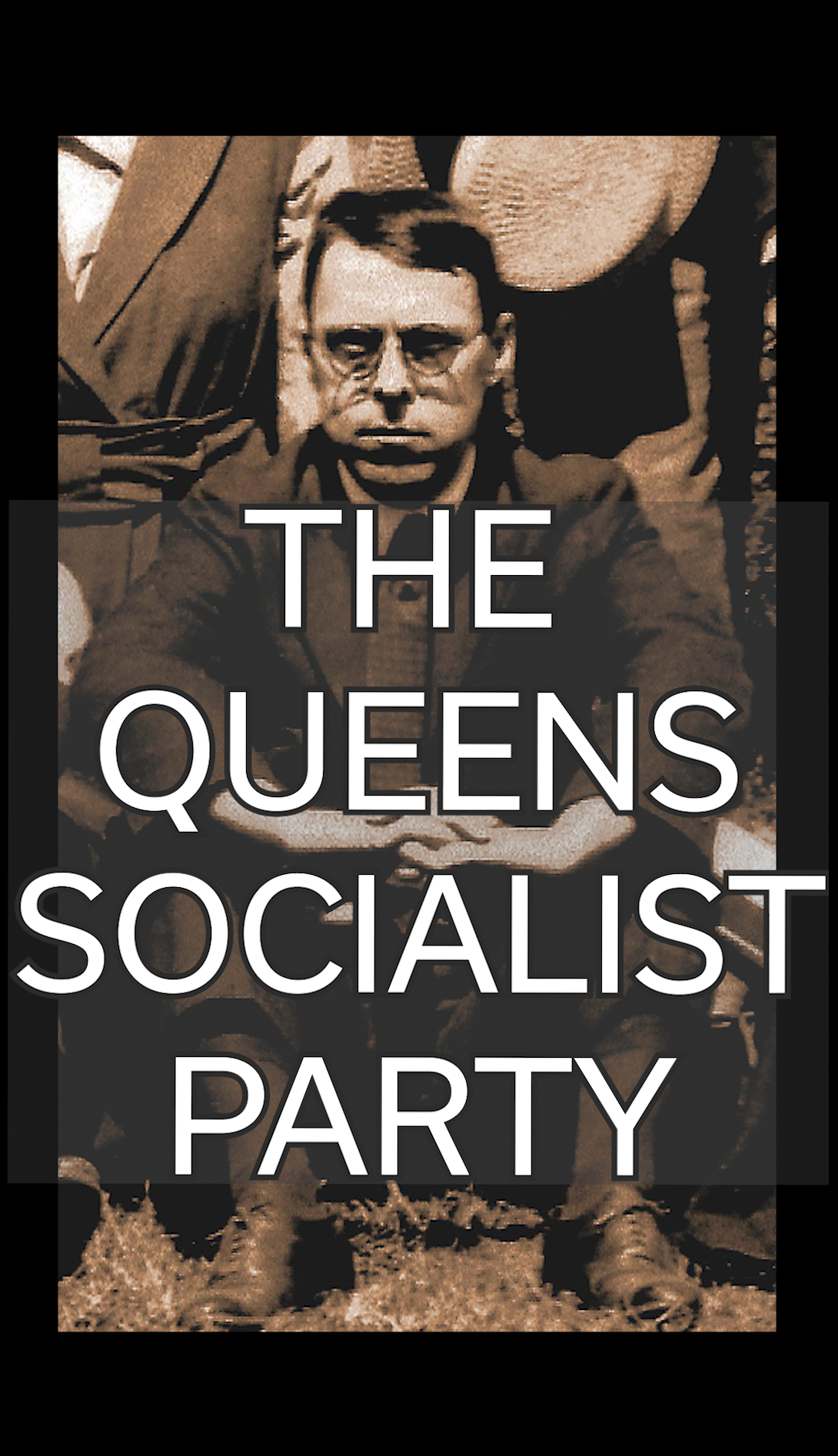
The Queens Socialist Party
(script)
INTRO
I live in a place known as the People’s Republic of Astoria, where all the elected officials are members of the Democratic Socialists of America.
It’s an area that helped give rise to Democratic Socialists such as AOC and Zohran Mamdani.
But it’s not the first time the area had Socialists who were organized and involved in elections.
In the last few years, I’ve spent a lot of time at the Queens Library reading the Long Island Daily Star, where I came across an earlier incarnation of Queens socialists – going back to the 1890s.
1910s
In the 1910s, the Astoria branch of the Socialist party organized mass meetings at Turn Hall on Broadway, Queens Plaza and elsewhere.
In 1918, Queens had about 3,700 Socialist (Party) voters.
1920s
In the 1920s, Queens’ population exploded to a million people.
In 1928 the Queens Socialist Party ran Edward Levinson of Sunnyside for borough president.
In 1929, when Norman Thomas ran for mayor, the Queens Socialists ran James Oneal for borough president. Oneal, 54 year, from the Midwest, lived in Richmond Hill and was as an editor for the New Leader, a socialist newspaper.
Sunnyside
The Queens Socialist Party had chapters across the borough but party membership concentrated in Sunnyside, (in) the Second Assembly District. In 1929, the Second district had the highest turnout for Norman Thomas, with 376 voters, or 15%, focused in the Sunnyside Gardens.
And the Great Depression set in.
By 1933, the second district had more than 700 enrolled socialist party members (such as, Edward Clarke, a former principal at a school for the deaf, and Mary Schonberg, executive secretary of the National Council of Jewish Women.)*
Oneal/early 30s
James Oneal critized the early New Deal agency the National Recovery Administration, calling it just a “shot in the arm” that wouldn’t do much. He also said the socialists should not join LaGuardia’s fusion movement; he said reformers always rise up to replace Tammany but the root of Tammany’s corruption was capitalism.
That year, the Queens socialists had a meeting in Ridgewhere where they discussed investigating conditions of small homeowners.
They had a meeting in Flushing, where unemployed people were appointed to a grievance committee to address accusations that relief organizations were discriminating against certain households.
In 1935, the Queens Socialists held a convention at its headquarters, which at the time was at 47-57 43rd Street, which is now a bakery, in Sunnyside. The convention was chaired by Leonard Lazarus of Jamaica.
1936 divide
In 1936, the U.S. socialist party split up into facitons. Most of the Queens Socialist Party stayed loyal to Norman Thomas, who led the militant faction.
James Oneal came to be considered olg-guard, and went his own way, concerned about a growing Communist influence in the organization.
In the presidential race, the socialist ticket received more than 9,300 votes in Queens, four times the Queens communist vote. Only one percent but about as much as in Brooklyn or Manhattan. And the next year, Leonard Lazarus ran for the new City Council without success.
*Cut for time